

available on the
Google Play
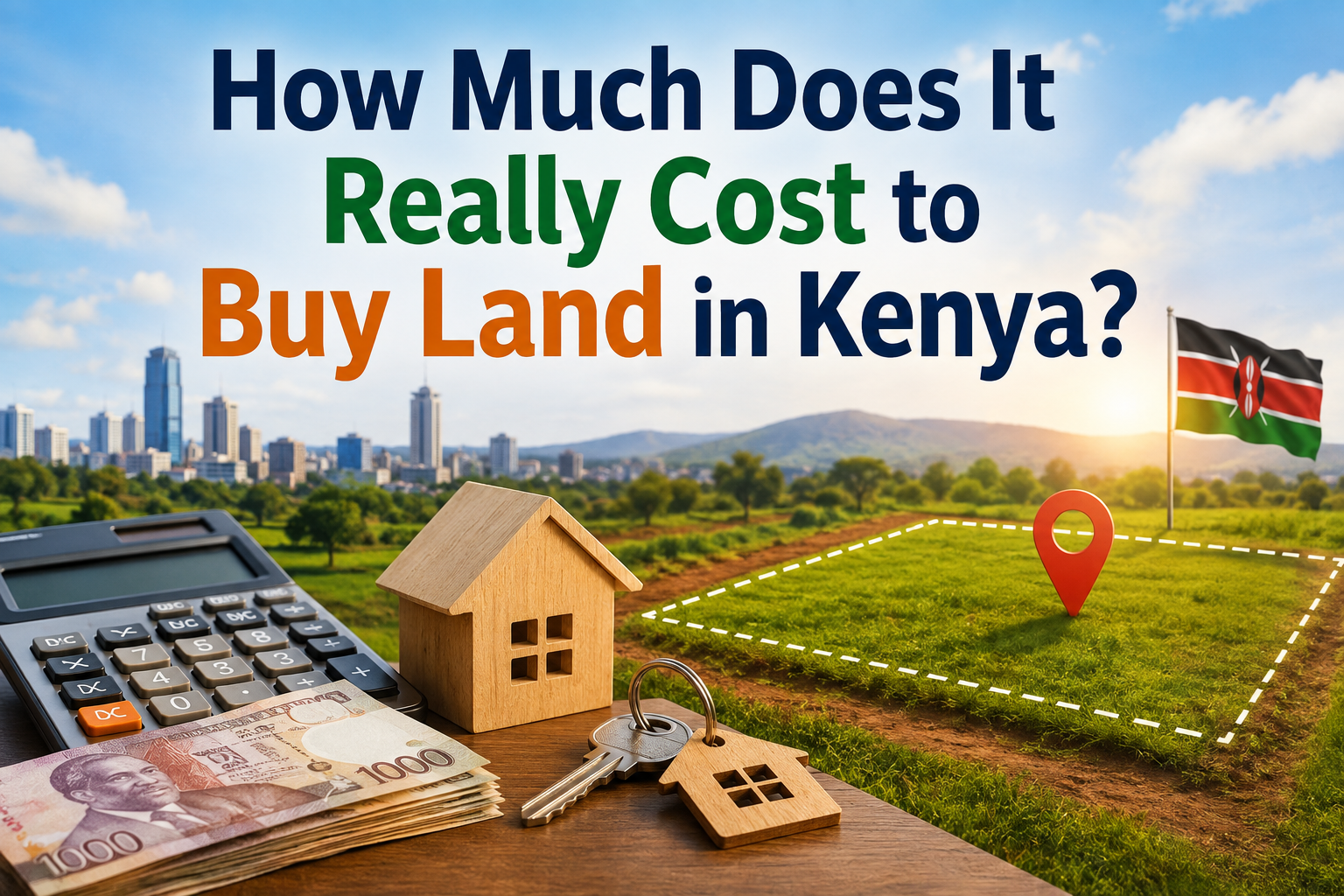
Discover how much money diaspora investors need to buy land in Kenya. Learn about land prices, deposits, installment plans, hidden costs, and smart investment strategies.
📌 Key Takeaways
One of the first questions every diaspora investor asks is: “How much money do I actually need to buy land in Kenya?” The question seems simple, but the answer spans a wide range. You can start with surprisingly modest sums, or invest millions depending on your goals. The key is understanding what drives land prices and what hidden costs await.
Many people assume they need tens of thousands of dollars to acquire property back home. That is a misconception. Affordable land for diaspora investors exists in growing corridors. The real challenge is not the price tag, but knowing where to look and how to buy safely. This guide answers the cost question in detail, from tiny starter plots to premium parcels, and shows exactly how Nyota Njema helps diaspora buyers purchase with confidence.
⚡ Quick Answer
You do not need millions of shillings to start investing in land. Many diaspora investors begin with affordable plots and grow their portfolios over time. Entry points can be as low as KSh 300,000 for a small plot in an emerging area, while premium locations require a larger budget.
The amount you need depends entirely on where you buy, the plot size, and whether you pay cash or use an installment plan. A 50×100 plot in a growing satellite town might cost between KSh 350,000 and KSh 800,000, while a quarter acre with a Mount Kenya view in Nanyuki could be several times that. The real question is not just “how much” but “how can I start with what I have?”
Kenya’s land market is fragmented. Prices vary between counties, within the same town, and even between neighboring estates. Infrastructure access, road tarmac, water, and electricity all cause sharp price jumps. That is why a plot 500 meters from a new tarmac road can cost half as much as one on the roadside, and double in value once the road is completed.
⚡ Quick Answer
Location is the single biggest factor, followed by infrastructure access, plot size, demand, and growth potential. A plot in an area with tarmac roads, electricity, and water will always cost more than raw land, but it also appreciates faster.
Land near Nairobi or in established towns like Kiambu, Ruiru, and Kitengela commands higher prices because of population pressure and rental demand. Further out in Nanyuki, Naivasha, or emerging rural corridors, the same budget buys far more land. Buying land in Kenya from the UK, USA, or Canada works best when you target growth corridors where infrastructure is coming, not where it has already peaked.
Electricity, water, and tarmac roads add immediate value. A plot inside a gated community with utilities and security costs more upfront but saves you years of waiting and additional development costs. For diaspora land investment Kenya, such managed estates provide peace of mind and easier remote management.
Smaller plots (50×100, 1/8 acre) are the most affordable entry points. They are ideal for a family home, a rental unit, or an Airbnb cottage. Larger parcels of half an acre or more allow for development, farming, or legacy planning, but obviously require a larger capital outlay.
Areas with planned SGR stations, new highways, industrial parks, or tourism attractions see faster appreciation. Naivasha’s SGR corridor and Nanyuki’s Rumuruti Road are prime examples. Speculative buying without genuine demand drivers, however, risks overpaying.
A plot far from an all-weather road might be cheap, but the cost of building access, drilling a borehole, and installing solar power can quickly erase the savings. Cheap land is only a bargain if the total cost of making it usable still keeps you within budget.
⚡ Quick Answer
Yes. You can buy land in Kenya with KSh 300,000. Several growing towns and emerging corridors offer 50×100 plots at this price point, especially when infrastructure is still being developed.
Typically a 50×100 plot in an upcoming area like parts of Mirera in Naivasha, some zones in Juja, or expanding outskirts in Nanyuki. The land will usually be raw, meaning murram roads, no immediate electricity, and water via borehole or future connection. But if you hold for 3 to 7 years as infrastructure arrives, the appreciation can be significant.
The cheapest places to buy land in Kenya are usually found in corridors where tarmac roads are planned but not yet completed. Examples include the Rumuruti Road expansion zone in Nanyuki, parts of Kamere and Karagita in Naivasha, and sections of the Thika outer belt. Nyota Njema frequently sources starter plots in these areas, giving diaspora investors a verified entry point.
Starting with a KSh 300,000 plot reduces risk. It is an accessible way to learn the buying process, understand land documentation, and build confidence. Once the first plot is secure and appreciating, scaling to larger investments becomes easier. This is exactly the philosophy behind Nyota Njema’s approach: meet people where they are and grow with them.
⚡ Quick Answer
Absolutely. With KSh 500,000 to KSh 1 million, you can access larger plots, better locations, and serviced estates. This budget puts you in a strong position for both rental income and long-term appreciation.
At this level, you can buy a 50×100 plot in a gated community with some infrastructure, or step up to a 1/8 acre or even 1/4 acre in an emerging growth corridor. You might secure land with a partial Mount Kenya view in Nanyuki’s outskirts, or a well-located plot in Naivasha near the highway.
With KSh 800,000 to KSh 1 million, 1/4 acre plots become realistic in several corridors. This size is versatile: build a family home, a boutique Airbnb, or simply hold for land banking. Many diaspora investors buying land in Kenya from the UK, USA, or Canada find this budget comfortable because it still translates to a modest sum in dollars or pounds.
Plots in this price range often come with graded roads, nearby electricity, and water connections. That reduces the additional costs you’ll need to budget for and makes the land usable sooner. The peace of mind alone is worth the slightly higher entry price.
Land in this bracket, particularly in Nanyuki’s lifestyle corridors or Naivasha’s logistics belt, has historically returned 8 to 14% annually in KSh terms. For someone buying land in Kenya while living abroad, the combination of currency advantage and capital growth builds serious wealth over a decade.
Ready to find a plot that fits your budget?
Let’s map out the best location for your investment, whether you have KSh 300,000 or KSh 1 million. The right plot is waiting.
⚡ Quick Answer
Beyond the land price, budget for due diligence (official search, surveyor), legal fees, and government transfer costs. These typically add 5 to 15% to the purchase price, but they protect your investment.
An official land search at the Ministry of Lands, a surveyor’s ground verification, and a lawyer’s opinion are non-negotiable. They confirm the title is genuine, the boundaries are correct, and there are no encumbrances. Skipping this to save a few thousand shillings is the fastest way to lose everything. Land buying costs in Kenya for diaspora investors include these verification fees, but they are a fraction of the property value.
A lawyer handling the conveyance will charge a professional fee, typically a percentage of the land value. This includes drafting the sale agreement, overseeing the transfer, and ensuring stamp duty is assessed correctly. Legal fees are a mandatory line item and an essential layer of protection.
Stamp duty, registration fees, and other government levies apply when the title changes hands. These vary by land value and location, but you should budget roughly 4 to 6% of the purchase price. Your lawyer will calculate the exact amounts before closing.
If you cannot travel, sending a trusted representative or paying for a professional inspection adds a small cost but massive reassurance. Many diaspora investors buying land from abroad rely on this service to confirm the land matches what was advertised.
Budgeting for the full cost of land in Kenya means looking beyond the headline price. A KSh 500,000 plot might realistically cost KSh 540,000 to KSh 570,000 fully transferred and secured. Knowing this in advance prevents surprises and keeps your investment journey smooth.
⚡ Quick Answer
Both options work. Cash purchases often come with discounts and immediate title transfer, while installment plans allow you to lock in today’s price and spread payments over time. The best choice depends on your cash flow and investment timeline.
Paying the full amount upfront often attracts a discount from sellers or developers. Title transfer happens immediately, giving you full legal ownership. There are no ongoing payment obligations, and you can start developing or reselling right away. For diaspora investors with lump sums ready, this is the simplest path.
Installments make land ownership accessible without waiting years to save a large sum. You secure a plot at current prices and pay over 6, 12, or even 24 months. This is especially useful when land prices are rising quickly. Nyota Njema’s La-Ndoa and Cha-Mass programs are built exactly for this purpose—helping couples and groups pool resources to buy land through manageable payment structures. Can diaspora investors buy land on installments? Yes, and it is one of the smartest ways to enter the market while managing foreign exchange flows.
A professional earning a steady salary abroad might prefer a short installment plan that aligns with monthly remittances. An investor with a lump sum from a bonus or savings might choose to pay cash and move on. Both approaches can lead to ownership, and Nyota Njema’s Diaspora Elite service tailors the payment structure to your situation.
⚡ Quick Answer
Start with one affordable plot in a growth corridor. Once it appreciates, use the equity or savings to buy a second, larger plot. Repeat. This stair-step approach builds a portfolio steadily without overextending.
The hardest step is the first one. Choose a small, verified plot in an area with clear growth drivers. Let the process teach you about titles, searches, and transfers. Ownership gives you an asset you can always fall back on. The cheapest way to start investing is often a 50×100 plot through a trusted provider like Nyota Njema.
After a few years, that first plot will have appreciated. You can sell it and roll the profit into a larger parcel, or keep it and buy an additional one. Diversifying across locations—say one plot in Naivasha and one in Nanyuki—spreads risk and captures different growth curves.
Land is not a get-rich-quick asset. It is a wealth-building tool. Over 10 to 20 years, a portfolio of even three or four well-chosen plots can fund children’s education, supplement retirement, or create a permanent family base in Kenya.
This is where Nyota Njema’s Legacy Reward comes in. It is designed for investors who want to pass down assets to their children and grandchildren. A half acre or acre held for decades becomes a valuable inheritance. Land bought today in a nascent corridor can define a family’s financial future.
⚡ Quick Answer
Nyota Njema offers a range of land sizes to suit different budgets and goals, from 50×100 plots ideal for a family home to 1 acre parcels perfect for farming, development, and generational wealth.
| Land Size | Suitable For |
|---|---|
| 50×100 | Family Home |
| 1/4 Acre | Residential or Investment |
| 1/2 Acre | Home + Expansion |
| 1 Acre | Development, Farming, Legacy Planning |
Each size serves a distinct purpose. A 50×100 is the most common entry point, affordable and flexible. Quarter acres allow for a larger home plus garden space. Half acres give room for a main house and a guest wing or rental unit. Full acres are for those thinking in generations. Nyota Njema sources these across Naivasha, Nanyuki, and other high-potential regions.
⚡ Quick Answer
Nyota Njema offers tailored programs for every diaspora investor: Diaspora Elite for remote buying, Legacy Reward for generational wealth, La-Ndoa for couples, Cha-Mass for groups, and U-GENZ for young investors starting early.
Designed specifically for Kenyans living abroad. This program handles title verification, legal processes, and site visits on your behalf. Whether you are buying land in Kenya from the UK, USA, or Canada, Diaspora Elite makes the process seamless and secure.
Aimed at building generational wealth. Legacy Reward encourages investors to acquire larger parcels and hold them for the long term. It is perfect for those who want to leave something tangible for their children and grandchildren.
This program helps couples invest together. By combining resources, partners can afford better-located or larger plots. It turns land ownership into a shared financial goal, strengthening both the relationship and the future.
Chamas and investment groups thrive with Cha-Mass. Pooling funds allows members to buy larger land parcels and subdivide later or develop jointly. It is a powerful vehicle for collective wealth creation among diaspora groups.
Younger diaspora investors, including second-generation Kenyans, can start small through U-GENZ. This program focuses on affordable entry points and education, ensuring that the next generation stays connected to home while building assets early.
Yes. $5,000 (approximately KSh 650,000) is a strong budget that can secure a 50×100 or even 1/8 acre plot in a growing area. Many diaspora investors start at this level.
With $10,000 (approximately KSh 1.3 million), you can access prime plots, larger sizes, and gated community properties in Nanyuki, Naivasha, and other high-demand corridors.
Deposits vary, but Nyota Njema’s installment plans often require a modest initial payment to secure the plot, with the balance spread over months. The exact amount depends on the specific property.
Yes. Through Diaspora Elite, Nyota Njema handles the entire process remotely, including searches, inspections, and legal transfers, so you can buy safely from abroad.
Absolutely. Installment plans are a popular option for diaspora investors who want to lock in today’s prices while managing payments over time. La-Ndoa and Cha-Mass are specifically designed for this.
Start with a small 50×100 plot in an emerging corridor. Focus on areas with planned infrastructure. A KSh 300,000 plot can be your entry ticket to the Kenyan land market.
Land remains one of the most reliable long-term investments in Kenya. With the right location, it offers steady appreciation, rental income potential, and a tangible asset that cannot be devalued like currency.
⚡ Quick Answer
You don’t need a fortune to buy land in Kenya from abroad. With as little as KSh 300,000 and the right guidance, you can own a verified plot and start building generational wealth today.
Buying land in Kenya while living abroad is not only possible; it is one of the smartest financial moves a diaspora investor can make. The combination of currency strength, rising land values, and flexible payment options means the barriers to entry are lower than ever. Whether you are buying land in Kenya from the UK, USA, Canada, or anywhere else, the key is to start, verify everything, and partner with a trusted team like Nyota Njema that understands your unique needs.
Your plot in Kenya is closer than you think.
Let’s match your budget to a verified piece of land that grows in value while you continue your life abroad.
Quick Links
Mon to Fri: 8am to 5pm Saturday: 8am to 1pm
Email: [email protected] Phone: +254 728 895 895 Nairobi, Thome, Mukuyu Court
Locations:
Topics:
Tools:
[Visit Nyotanjema.com Now]