



available on the
Google Play

Buying land in Kenya is often sold as the fastest path to wealth.
You’ll hear phrases like “last price today only,” “prime plot going cheap,” or “urgent sale, owner abroad.”
On the surface, cheap land feels like opportunity. But in reality, the lowest price is often where the highest risk hides.
Across Kenya’s fast-growing property corridors, Kiambu, Machakos, Kajiado, Naivasha, Thika, Kitengela, and coastal expansion zones land fraud, disputes, and hidden legal issues remain widespread.
Reports show increasing cases of fake titles, double sales, and disputed ownership structures that can trap unsuspecting buyers in court battles for years.
This guide breaks down why “cheap land” is not always a bargain and how smart investors evaluate land beyond price.
You’ll learn exactly what to check before paying a shilling, and how to spot red flags that turn a cheap deal into a very expensive mistake.
Quick Answer
Cheap land in Kenya is not always a good deal because unusually low prices often indicate hidden risks such as fake or disputed title deeds, double-selling of plots, lack of proper subdivision approval, poor infrastructure access, or land located in restricted zones. Many low-priced deals also involve legal disputes or fraudulent sellers who use attractive pricing to rush buyers into skipping due diligence.
Cheap land marketing is not accidental—it is strategic. Sellers and agents know exactly which buttons to press:
“Price dropping today only”
“Last plot remaining”
“Investor must act fast”
This creates a fear of missing out (FOMO). The buyer’s brain switches from analysis to urgency. They see others supposedly lining up, and they rush to pay a deposit before someone else grabs the “bargain.” That emotional snap decision is precisely what fraudsters bank on.
In real estate, especially in Kenya, speed is the enemy of safety. A legitimate seller does not need pressure tactics. The land sells itself through verified documents, proper access roads, clear ownership, and realistic market pricing. When a price drops far below what comparable plots are fetching, the question isn’t “What a steal!” but “What’s being hidden?”
The smart investor pauses, controls the emotion, and digs deeper. A genuine deal can withstand a few days of due diligence. A scam cannot.
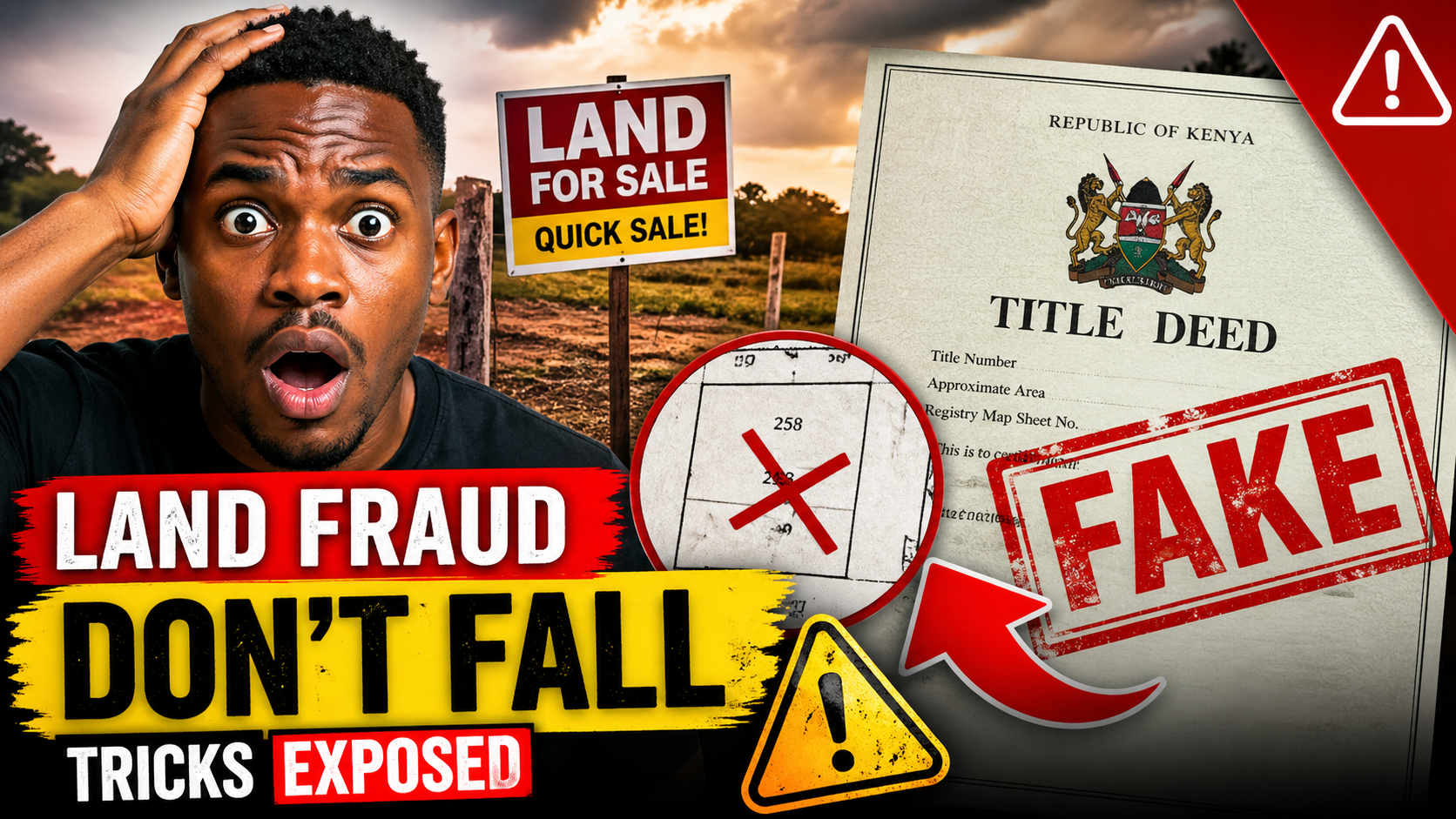
One of the biggest risks in cheap land deals is document fraud. The title deed itself might be a complete forgery, an altered document, or a genuine title for a completely different parcel. Common issues include:
Forged title deeds using stolen or duplicated forms
Altered parcel numbers to match a visible, empty plot
Duplicate ownership claims where multiple people hold “originals”
Land registered under someone else’s name, with the seller posing as the owner
Land fraud remains a major issue in Kenya’s real estate market, fueled by weak verification systems and collusion between rogue brokers and intermediaries. In many cheap deals, the seller cannot produce the original title deed—only a photocopy. When you insist on verification, they delay or discourage you altogether.
What to do instead: Insist on an official land search at the Ministry of Lands or ArdhiSasa platform before anything else. If ownership cannot be confirmed independently, walk away—no matter how cheap the price.
Further reading: Our detailed guide on how to verify a title deed in Kenya walks you through each document check step-by-step.
This is one of the most common land scams in Kenya, and it feeds directly on low prices. How it works: a single parcel is sold to multiple buyers. Each buyer receives documents that look genuine—a signed agreement, a copy of the title, maybe even a transfer form. But the con artist collects money from all of them and disappears. Only when buyers show up to build do they discover each other.
In rural and peri-urban areas, where land is unfenced and boundaries are unclear, this trick is even easier to execute. Fraudsters exploit delays in land registry updates and the fact that many buyers don’t immediately lodge a caveat or register their interest. The cheap price attracts many buyers fast, so the fraudster collects more money before vanishing.
Why cheap land invites this scam: Low price = high demand = faster cash collection before discovery. If a deal feels too cheap and the seller is pushing for quick payment without a proper registration process, suspect double selling.
Protect yourself: Always run a fresh land search before paying, and lodge your transfer immediately. A caveat can also be registered to warn other potential buyers of your interest.
Cheap land often carries legal baggage that you only discover months or years later. You might be buying land that is:
Under a court injunction (frozen pending a ruling)
Locked in a bitter inheritance dispute after the original owner died
Family land where some members oppose the sale
Community land without clear subdivision and individual titles
In Kenya, many rural parcels are still stuck in succession processes. The title may still be in a deceased person’s name, and the seller may have no legal authority to transfer it. What looks like a bargain is often a legal problem waiting to erupt.
Once you buy disputed land, you cannot develop freely. Banks will reject it as collateral. You might even get dragged into a court case you didn’t start, spending years and more money than the “savings” you made on the purchase price.
Reality check: Always ask for a copy of the grant of probate or letters of administration if the owner is deceased. Verify it at the court registry. If the seller avoids this conversation, the risk is too high.
Not all land is equal—even if it looks big on paper. Cheap land is often cheap because it sits in a location with serious problems:
No road access, or only a narrow footpath
No water or electricity nearby, with no plan to extend them
Located in a flood-prone valley or rocky, unusable terrain
Far from schools, hospitals, and markets, meaning rental demand is zero
Developers may advertise “next to future highway” or “near upcoming town,” but without confirmed government plans—budgeted and tendered—those claims are speculation. A cheap plot can become very expensive when you factor in the cost of building a road, digging a borehole, or hauling construction materials across muddy paths.
Sometimes, the infrastructure costs alone exceed the price of the land, turning what looked like a bargain into a financial drain. Always factor the all-in cost: purchase + connection fees + access improvements + time.
Risk Explanation
The main risks of buying cheap land in Kenya include fake title deeds, multiple sales of the same plot, unresolved inheritance disputes, illegal or unapproved subdivisions, poor road access, and land located in protected or restricted areas. Buyers may also face legal battles, delayed ownership transfer, or total loss of investment.
Before you risk your money on a deal that looks too good to be true, speak with a team that puts verification first. At NyotaNjema, every plot we sell comes with a clean title, physical beacons, and an open invitation for your own lawyer and surveyor to inspect. Book a free, no-pressure consultation and protect your investment from day one:
Another major risk buried in cheap land deals is the lack of legal subdivision. You may be sold a “plot” that is really just a share of a larger, undivided parcel. Common red flags:
The land is marketed as “shares” instead of actual titled parcels
No mutation forms or approved survey maps exist
The county physical planning office has not approved the subdivision
The seller’s scheme is unregistered, meaning you’ll never receive an individual title
These arrangements often look cheap because no individual title exists yet. The seller promises, “We are processing the titles—buy now at a low price before they come out.” But years pass, and the titles never materialize. Without proper subdivision approval, you cannot get a valid title deed in your name, and you cannot sell or develop the land securely.
How to spot it: Ask for the approved survey and subdivision plan from the county. If they cannot produce it, or if they pressure you to accept a “share certificate” instead of a title, step back. Insist on buying only when individual titles are ready.
Some cheap land is cheap for a simple, irreversible reason: it’s illegal to build on. It may be located in:
Riparian reserves (within 6–30 meters of a river, depending on regulations)
Road reserves set aside for future highways or bypasses
Forest land, swamp reclamation, or protected environmental areas
Airport expansion zones or government acquisition corridors
High-voltage power line wayleaves
Fraudsters may show you flat, empty land that looks developable. But the moment you clear it and start building, county enforcement or national agencies arrive with demolition orders. At that point, recovering your money is nearly impossible.
Prevention: Check land classification at the county land office. Cross-reference with the survey department to confirm the parcel is not gazetted for public use. A licensed surveyor can identify restricted boundaries on the ground.
Fraud Indicator Focus
Cheap land in Kenya is likely risky if the seller avoids official land searches, rushes the sale, offers unusually low prices compared to nearby plots, lacks original title documents, or discourages physical site visits and legal verification.
The purchase price is only the start. Cheap land often comes with hidden costs that accumulate quickly:
Survey corrections for misplaced beacons or boundary disputes
Legal fees to sort out undocumented ownership or missing signatures
Road opening contributions demanded by the developer later
Utility connections (electricity, water) that may require long extensions
Stamp duty and transfer fees that are based on government valuation, not your purchase price
Fines or penalties for previous unpaid land rates
A plot advertised at KSh 200,000 can easily end up costing KSh 600,000 or more once you tally these extras. And that’s assuming no court case erupts. Always get a full cost breakdown before committing, and compare it to the all-in price of a fully processed, titled, serviced plot from a reputable developer.
Fraud thrives where due diligence is skipped. In low-cost land transactions, buyers often:
Trust verbal promises because they sound convincing
Avoid hiring a lawyer to “save costs”
Skip the official land search because it feels like a hassle
Ignore physical site visits or rely on staged photos
Rush payments without a signed, legally reviewed sale agreement
But land investment in Kenya demands a structured process. The minimum checks include:
Official land search – confirms the registered owner and any encumbrances
Physical site visit – you or a trusted person walks the land with a surveyor
Surveyor confirmation – verifies beacons, boundaries, and map consistency
Lawyer review – checks all documents, drafts the sale agreement, and manages the transfer
Skipping these steps is the fastest route to loss. The small amount you save on legal fees is nothing compared to the potential loss of your entire investment.
Cheap land is rarely sold through logic. Instead, it’s sold through emotion:
“Don’t miss this opportunity”
“Prices are rising tomorrow”
“Only 2 plots left—if you wait, they’ll be gone”
This emotional pressure clouds judgment and overrides the analytical part of your brain. The result? You pay quickly, verify later—or never.
Smart investors put logic first. They focus on:
Title verification
Location growth potential (infrastructure plans, population trends)
Legal clarity (no disputes, clean succession)
Comparable market pricing (what are other plots in the area actually selling for?)
Emotion buys land. Logic protects money.
Investor Insight
Cheap land in Kenya can be a good investment only if it has verified ownership, proper legal documentation, and confirmed development potential. However, most extremely cheap land deals carry higher risk and require thorough due diligence before purchase.
A simple rule experienced investors follow:
If the price is unusually low, assume risk until proven otherwise.
This doesn’t mean cheap land is always bad. It means it requires:
Higher scrutiny, not less
More professional checks, not fewer
Slower decision-making, not rushed
Because in land investment, the true cost of a mistake isn’t the money you lose today—it’s the years of court battles, the inability to develop, and the stress of watching your land become a liability.
Cheap today can become expensive for decades.
Before buying any land—whether cheap or premium—run through this checklist.
Confirm title deed authenticity through an official search
Check ownership history and any registered encumbrances
Demand the original title and compare it with the search certificate
If the owner is deceased, request a confirmed grant of probate or letters of administration
Visit the actual site yourself or send a trusted representative
Walk the boundaries with a licensed surveyor
Verify that the beacons match the official survey map
Talk to neighbors about the land’s history and any known disputes
Hire an independent lawyer (not the seller’s lawyer) to review all documents
Engage a licensed surveyor to confirm the ground position and map
Check zoning and land classification at the county offices
Confirm that all subdivision approvals exist for smaller plots
If any of these steps are discouraged by the seller, walk away. A genuine seller welcomes thorough verification because they have nothing to hide.
Need a refresher on fraud tactics? Read our complete article on common land fraud tricks in Kenya to see exactly how scammers operate and how you can spot them early.
Cheap land in Kenya is not automatically a scam—but it is always a signal to investigate deeper. In a market where fraud, disputes, and documentation issues are common, the safest investors are not those who find the cheapest land. They’re the ones who understand why it is cheap, and who verify everything before parting with their money.
The goal is not to buy land cheaply. The goal is to buy land safely, legally, and sustainably—so that when you build, rent, resell, or pass it on to your children, you’re building on a solid foundation, not a hidden time bomb.
Because in real estate, especially in Kenya:
The real cost of cheap land is often paid later—in courtrooms, surveys, and lost time.
At NyotaNjema, we remove the guesswork. Every project—from Kikuyu Spring Valley to Kitengela Pine Oak Gardens and Naivasha Heritage Gardens—comes with a clean mother title, approved subdivisions, physical beacons, and open access for your independent verification. You don’t gamble. You own.
Don’t let a “cheap deal” become an expensive lesson. Let us show you verified, appreciating land in high-growth corridors you can trust.
👉 Book your free consultation and see your plot before you pay:
Contact Nyota Njema Real Estate today.
 Call / WhatsApp: +254 728 895 895
 Email: [email protected]
 Click here to book an appointment
Written by Nyota Njema Real Estate
Nyota Njema is a registered real estate company in Kenya . We specialise in verified land sales across Kiambu County, with full due diligence on tenure type, land rent, and title deeds.
Locations:
Topics:
Tools:
Mon to Fri: 8am to 5pm Saturday: 8am to 1pm
Email: [email protected] Phone: +254 728 895 895 Nairobi, Thome, Mukuyu Court